Mermaid Garden — Artist Statement
She is both earth and tide. She gathers what is left behind, what is whole and what is broken; takes it home and makes it bloom.
Every seashell has a story. Hold one up to your ear sometime and let it whisper to you. When I pick up a seashell, like Ariel with her collection of human things, I can’t help but admire it and want to add it to my own. But I’m not a traditional beachcomber. Everything I use is never live-harvested, but ethically sourced through reputable dealers or collected by these hands along the shores of Atlantic Dunes in Delray Beach, Florida — where my inspiration truly bloomed and became something else.
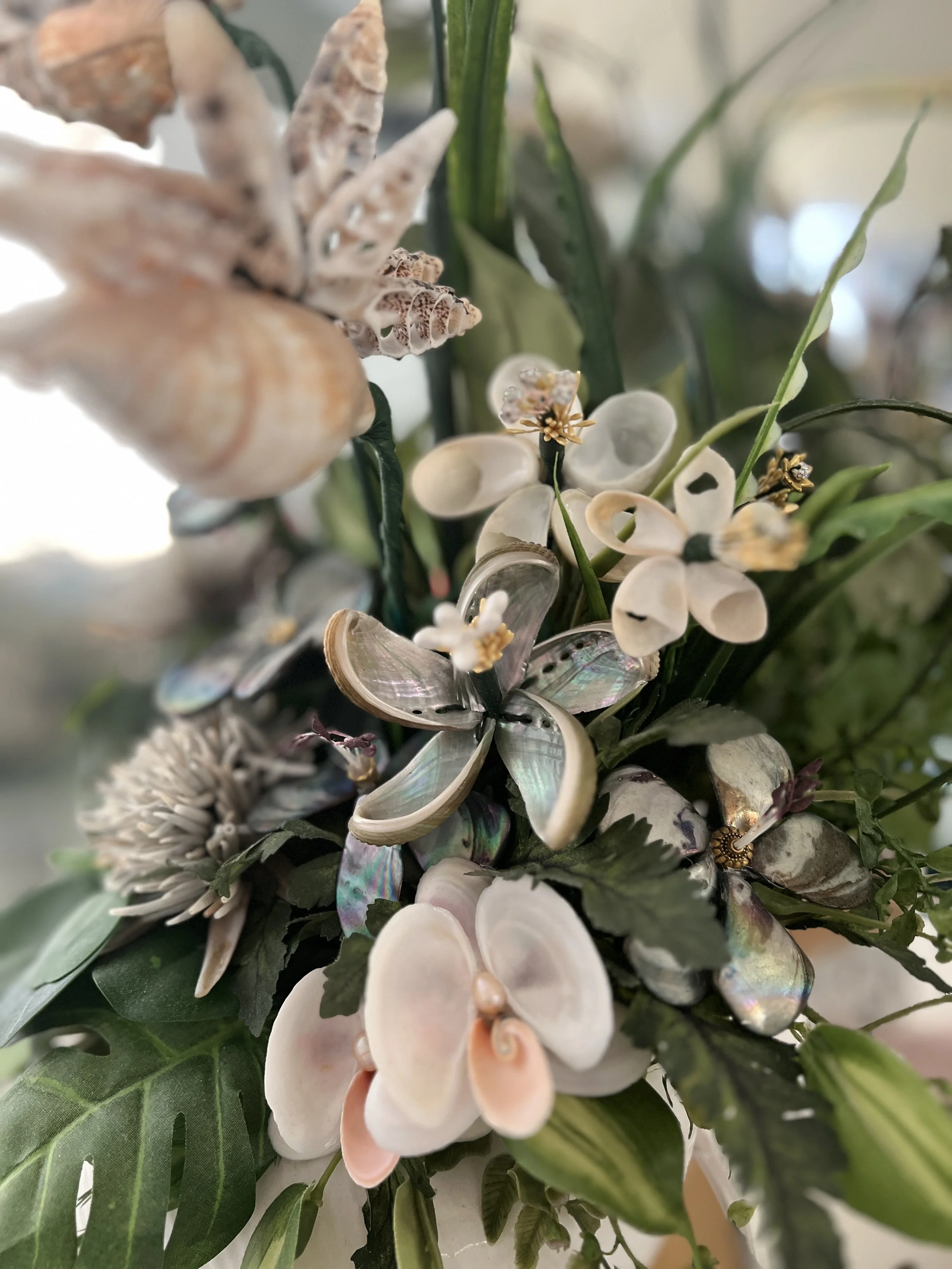
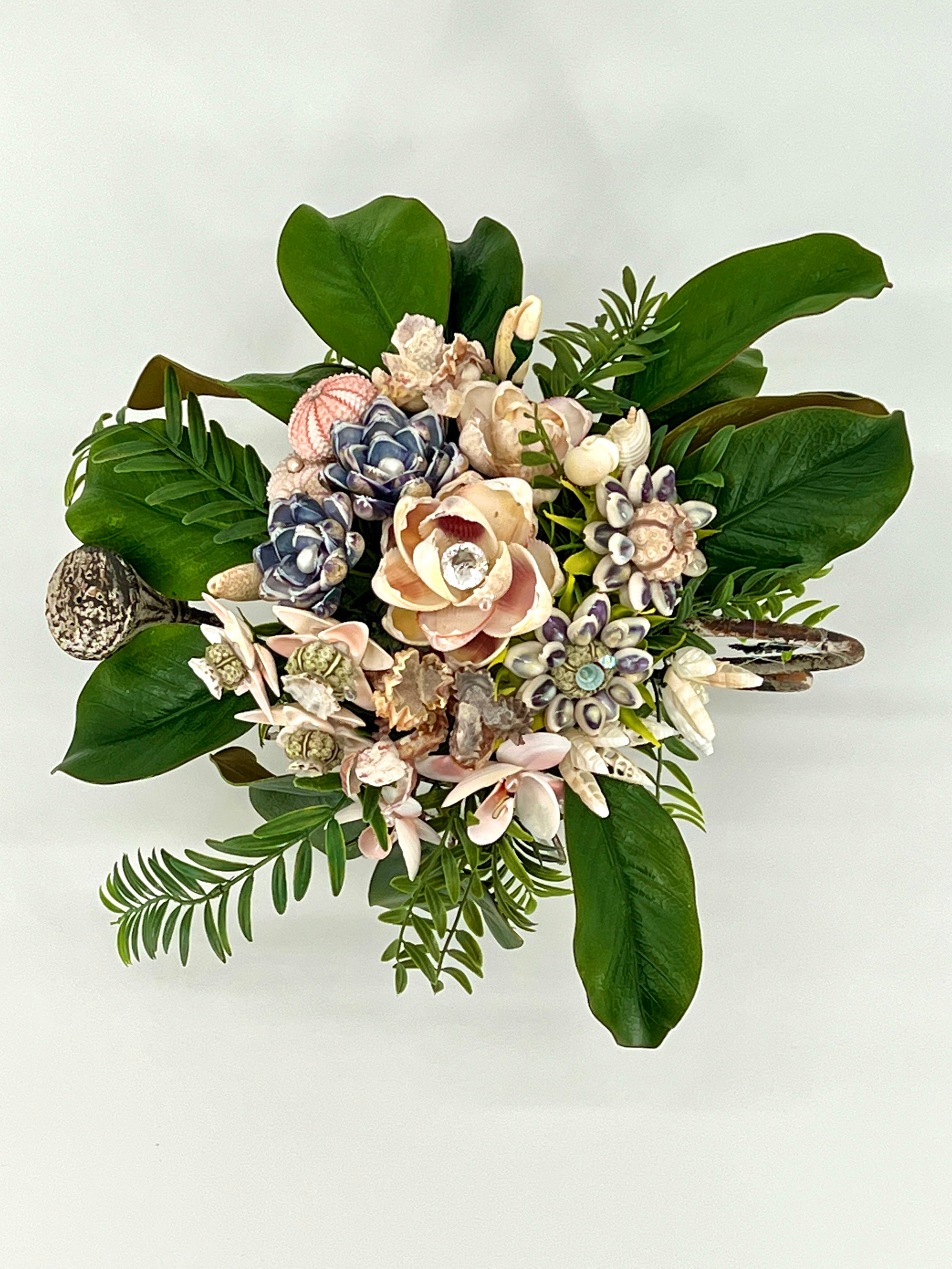
Growing up landlocked in Kanab, Utah, my materials were limited. But in Florida, my ideas took on a life of their own. I discovered shells so small they felt like secrets — perfect rose petals. Slipper shells arranged together became plumeria. Jagged clam shells formed irises so natural they took my breath away. It felt as though abandoned art supplies were scattered along the shore, waiting. So I collected. And kept. And began to create.
Eventually, life pulled me back to landlocked Utah. Sitting in a cold basement studio that winter, those shells seemed to whisper with the ocean still inside them. By then, I was carrying more life experience than I had language for. Words would not come. But there was something I had long loved and studied deeply — the language of flowers.
A mermaid garden emerged. Blooms formed from the sea. Each one began to beckon — not to tell its own story, but to help tell mine. My journey found its voice through seashell flowers.
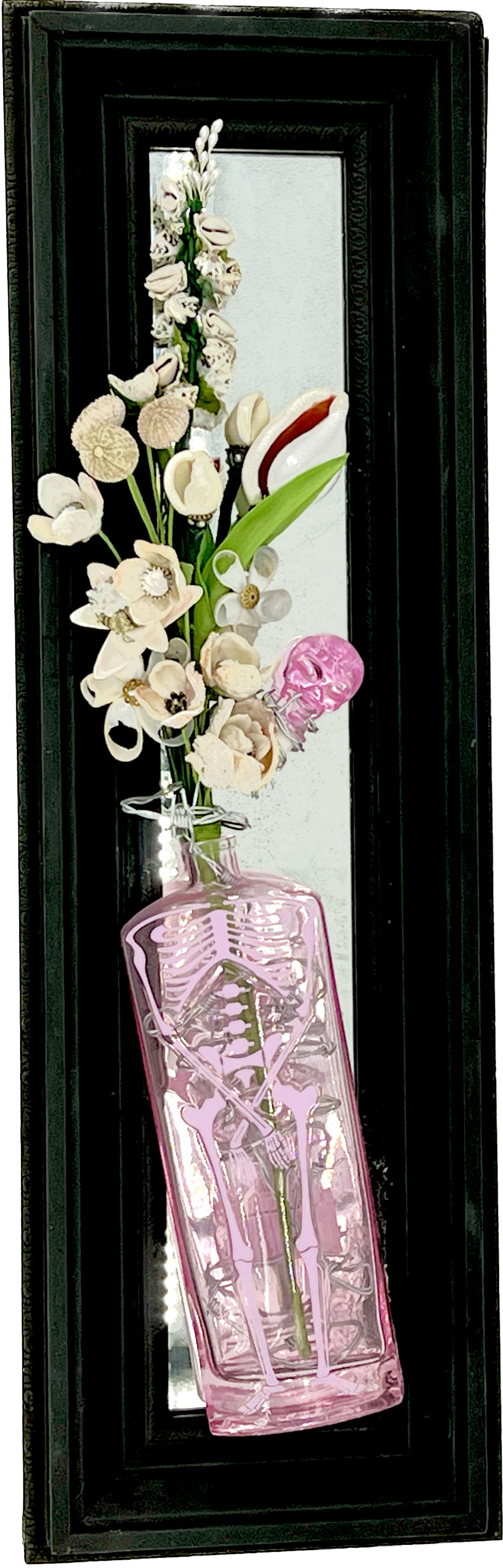
While these works are born from lived experience, they are not depictions of trauma itself, but of transformation — what remains, what regrows, and what finds new language. Works range from intimate sculptural florals to larger assemblages incorporating mirrors, found objects, and natural forms.
Materials & Process
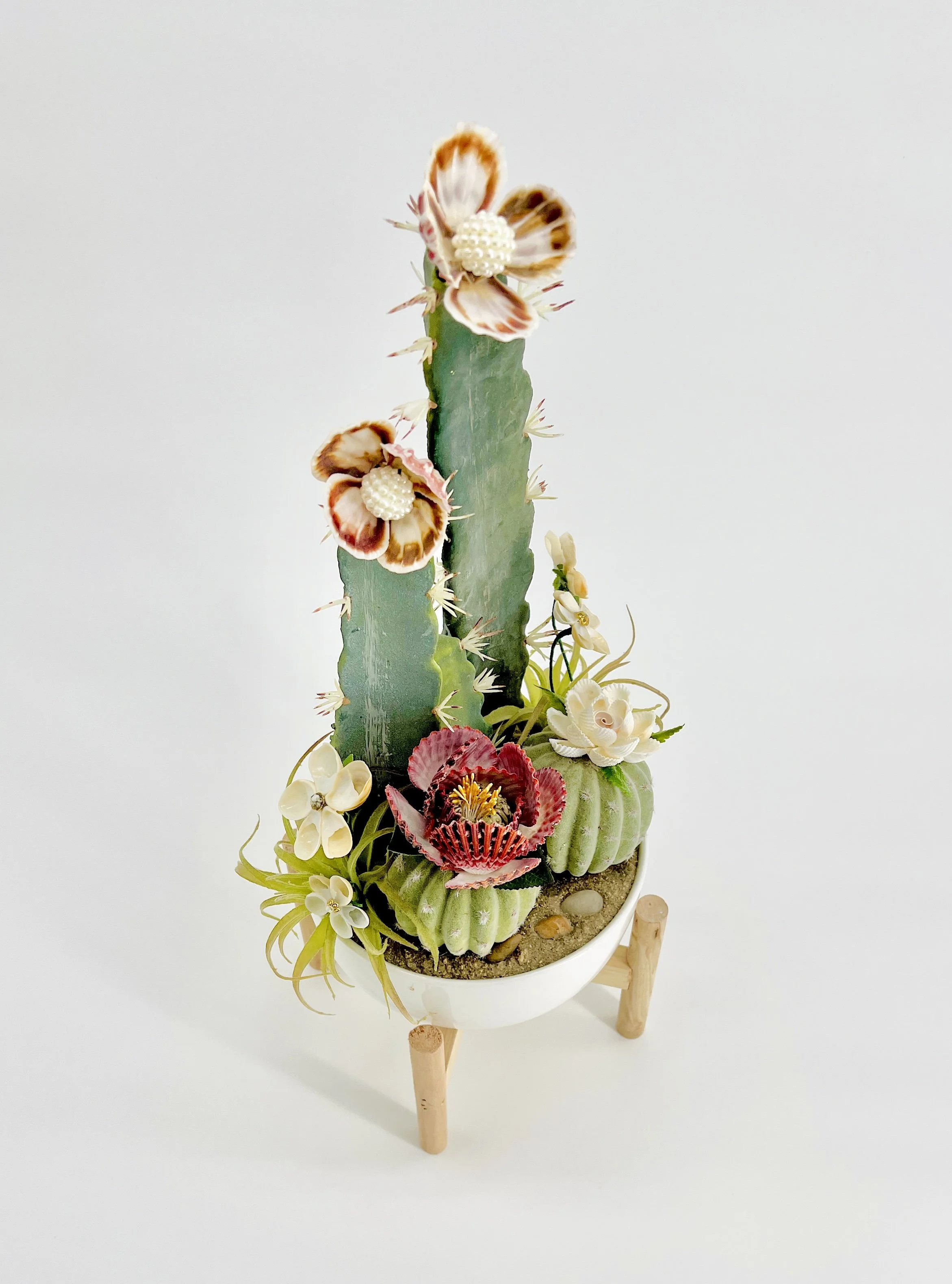
Each piece in the Mermaid Garden is hand-constructed from ethically sourced seashells, natural elements, and mixed media. No live materials are harvested. Flowers are built petal by petal — often requiring dozens of shells per bloom — and assembled intuitively rather than from pattern or mold. The process is slow, tactile, and meditative, mirroring the emotional excavation each piece represents.
I am healing through cultivating my Mermaid Garden. Perhaps the messages these works contain can help others along their journeys — or help them see the beauty in what was once considered an empty shell.
🧜🏻♀️
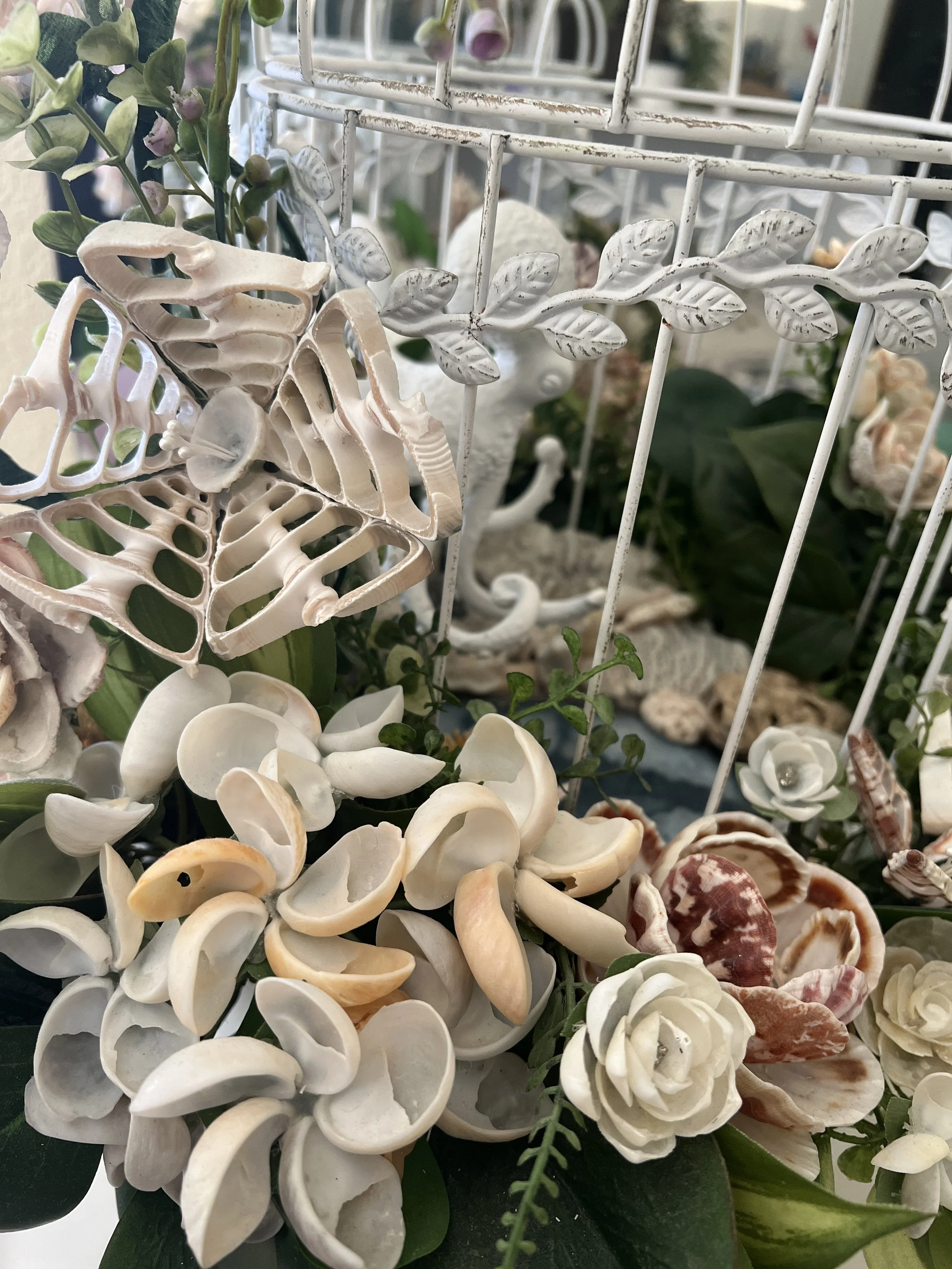

Mermaid Garden

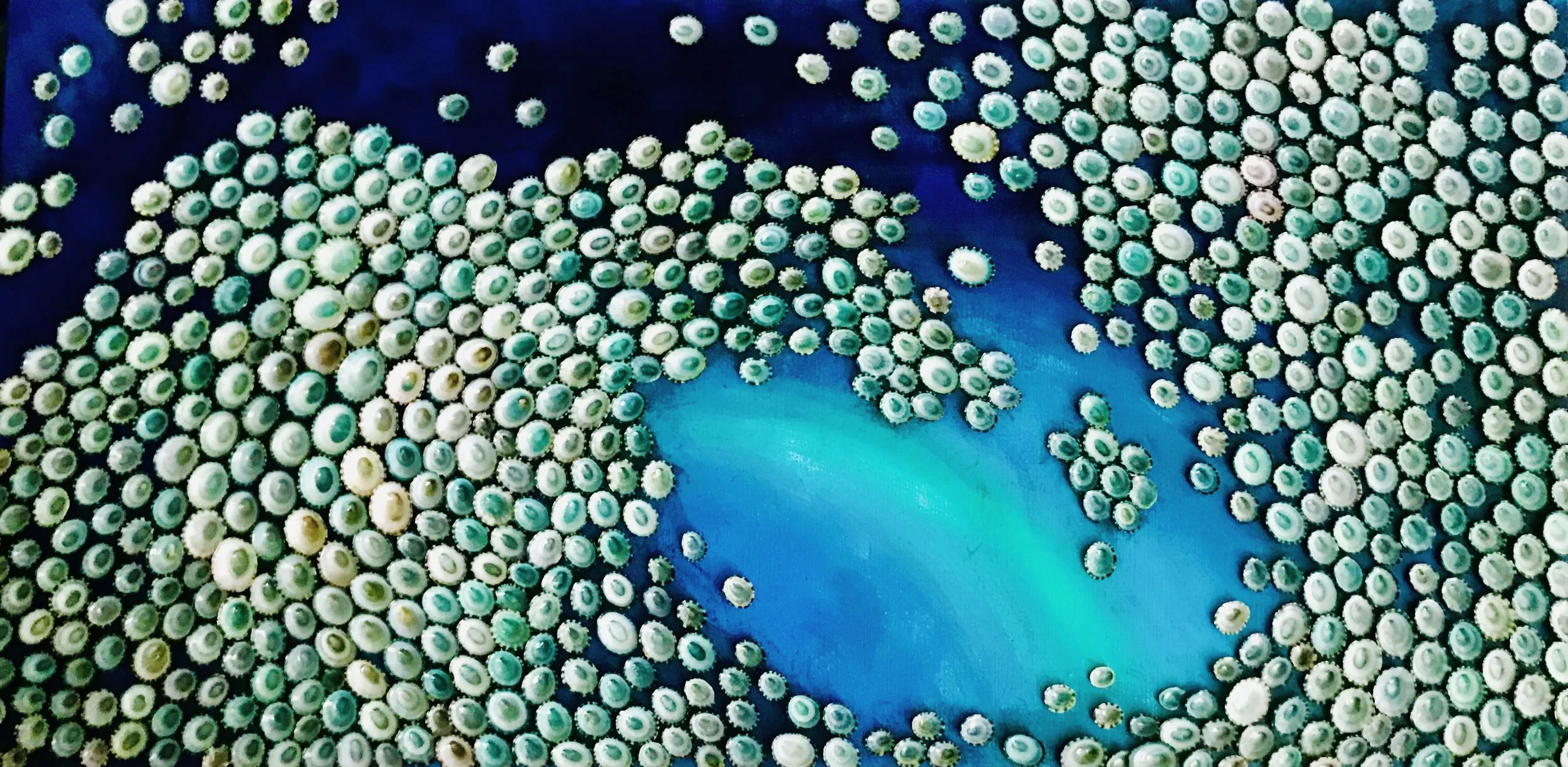
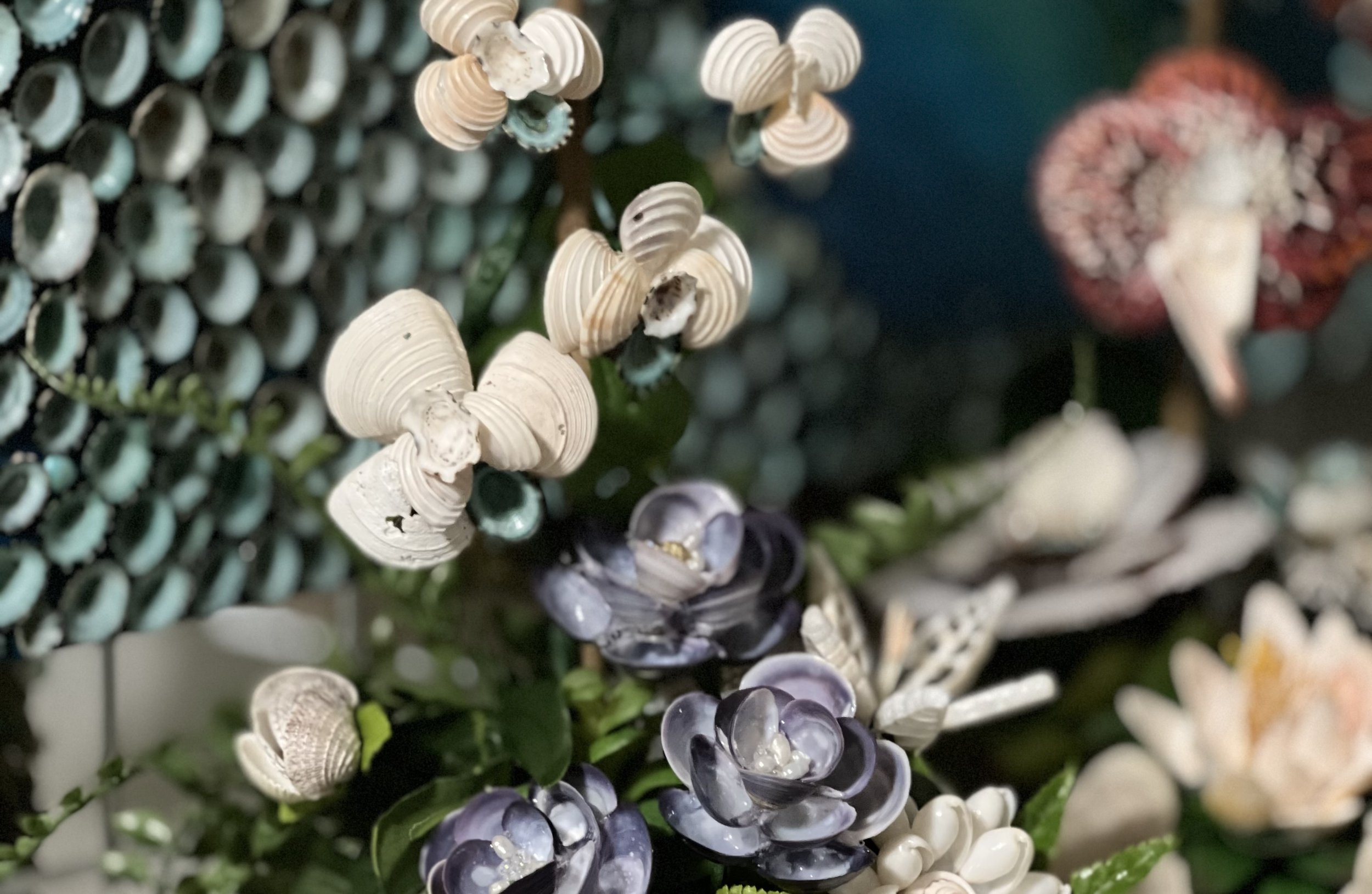

Siren of the Fractured Sea
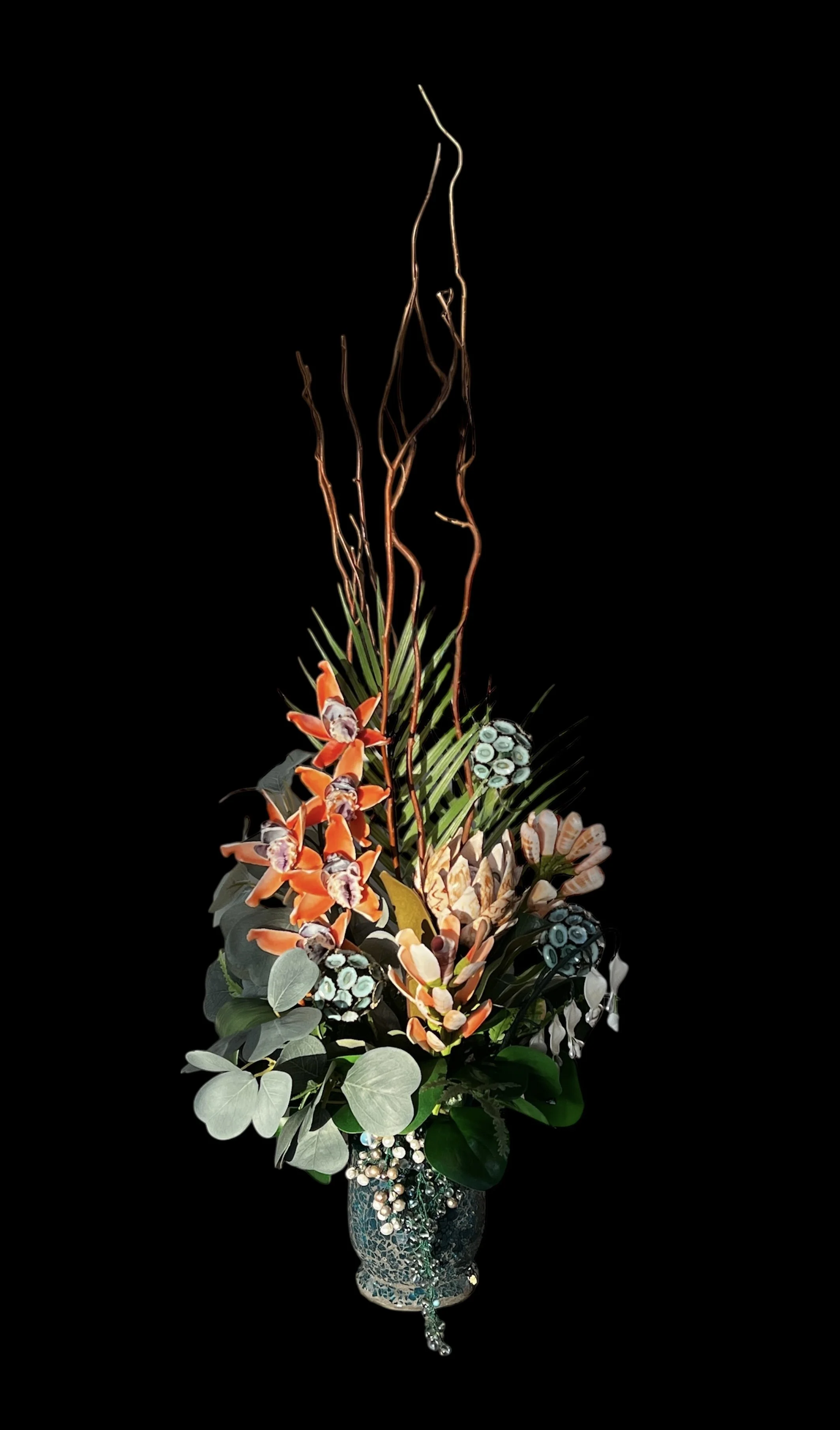
Siren of the Fractured Sea explores how authentic voice, embodiment, and expression historically can be misnamed as danger. Early christians carved mermaids into their churches to remind parishioners to shun vanity and expressive desire. Sirens are feared for what their song awakens — curiosity, longing, self-recognition, self-reflection. In many systems, that awakening is treated as threat.
The fractured sea represents the moment this narrative breaks open: and we piece ourselves back together more beautifully for the journey we have made to claim our authentic selves.
And when the supposed danger is revealed to be projection rather than truth, what emerges is not a siren at all; a mermaid — playful, creative, alive, and deeply feeling— navigating waters shaped by fear rather than malice. This work reflects the reclamation that occurs when voice is no longer restrained by accusation, and expression is freed from the burden of blame.
Love Yourself, you are sexy, luxury, refinement, self-love, kindness, uniqueness.
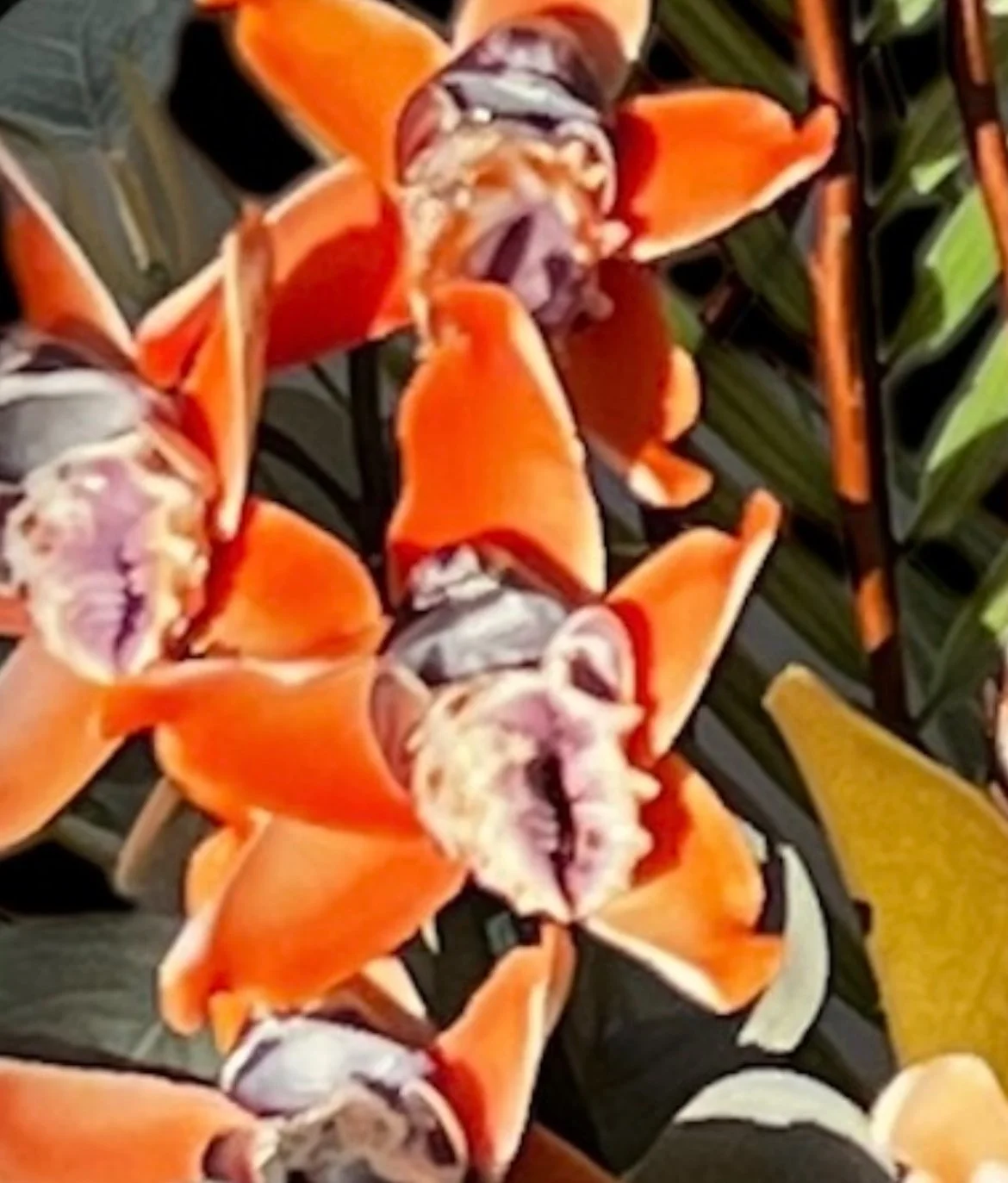
Cymbidium Orchid
“I have lost all,” mourning, gentle healing, origins, new possibilities, admiration. Paper Moon Flower
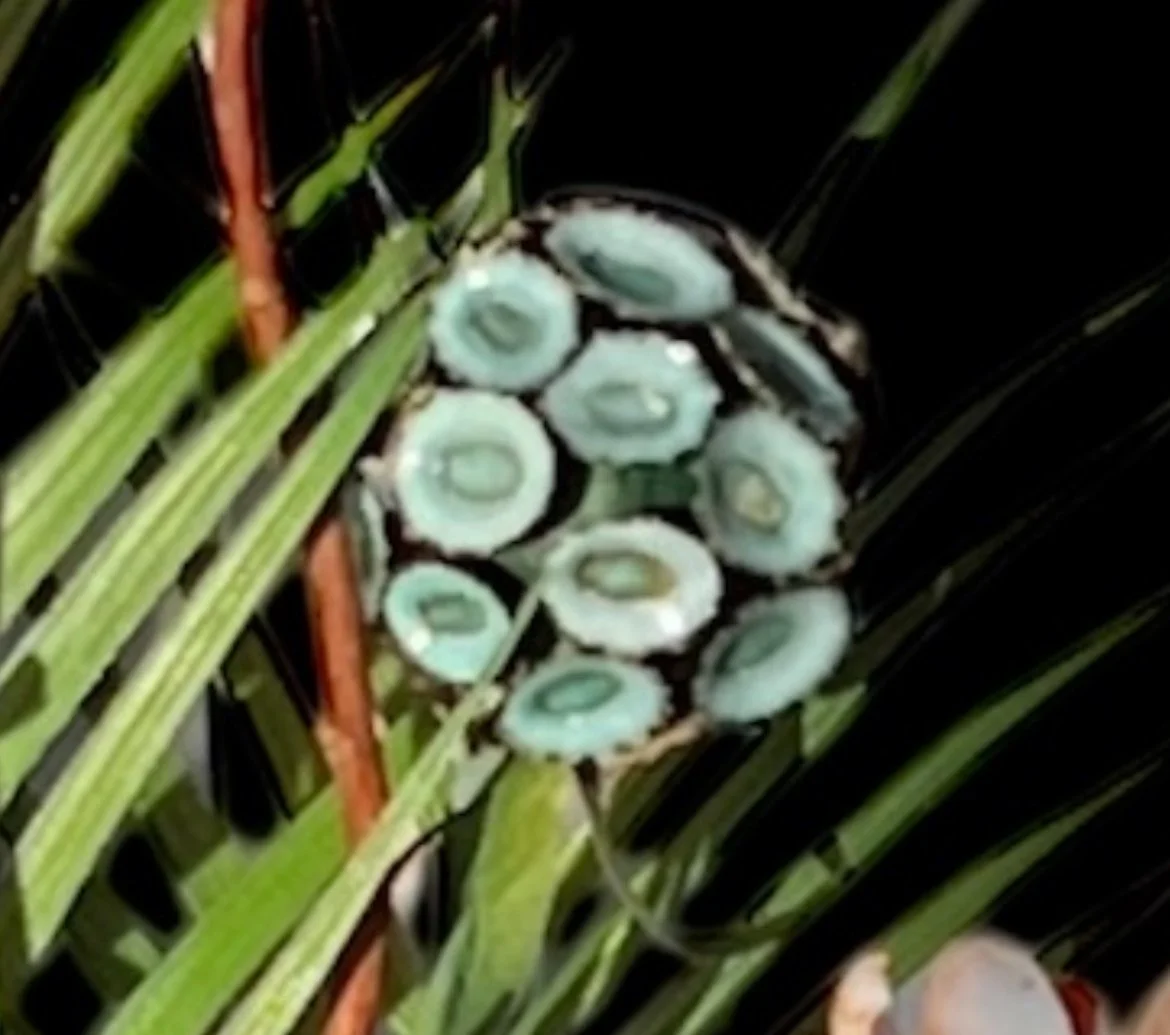
Scabiosa Stellata
Named after the Greek God Protea who could change shape; transformation, creativity, courage, illumination, “I am here”, embracing one’s inner power, standing tall amidst challenges, criticism. Fire is essential for their lifecycle, making them symbols of rebirth and resilience in fire-adapted landscapes such as the South African fynbos biome.
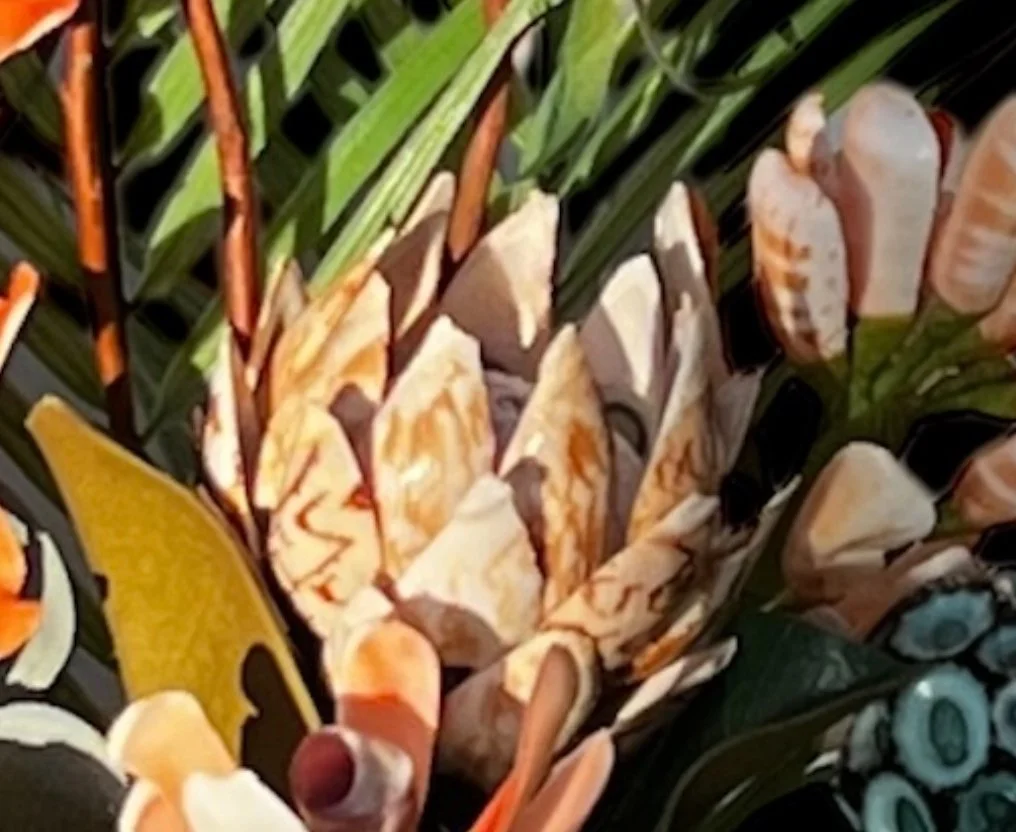
King Protea
I want to tell you how I feel, expressing emotions, passionate love, rejection of love, sensitivity, compassion, detachment, breakup healing, letting go.
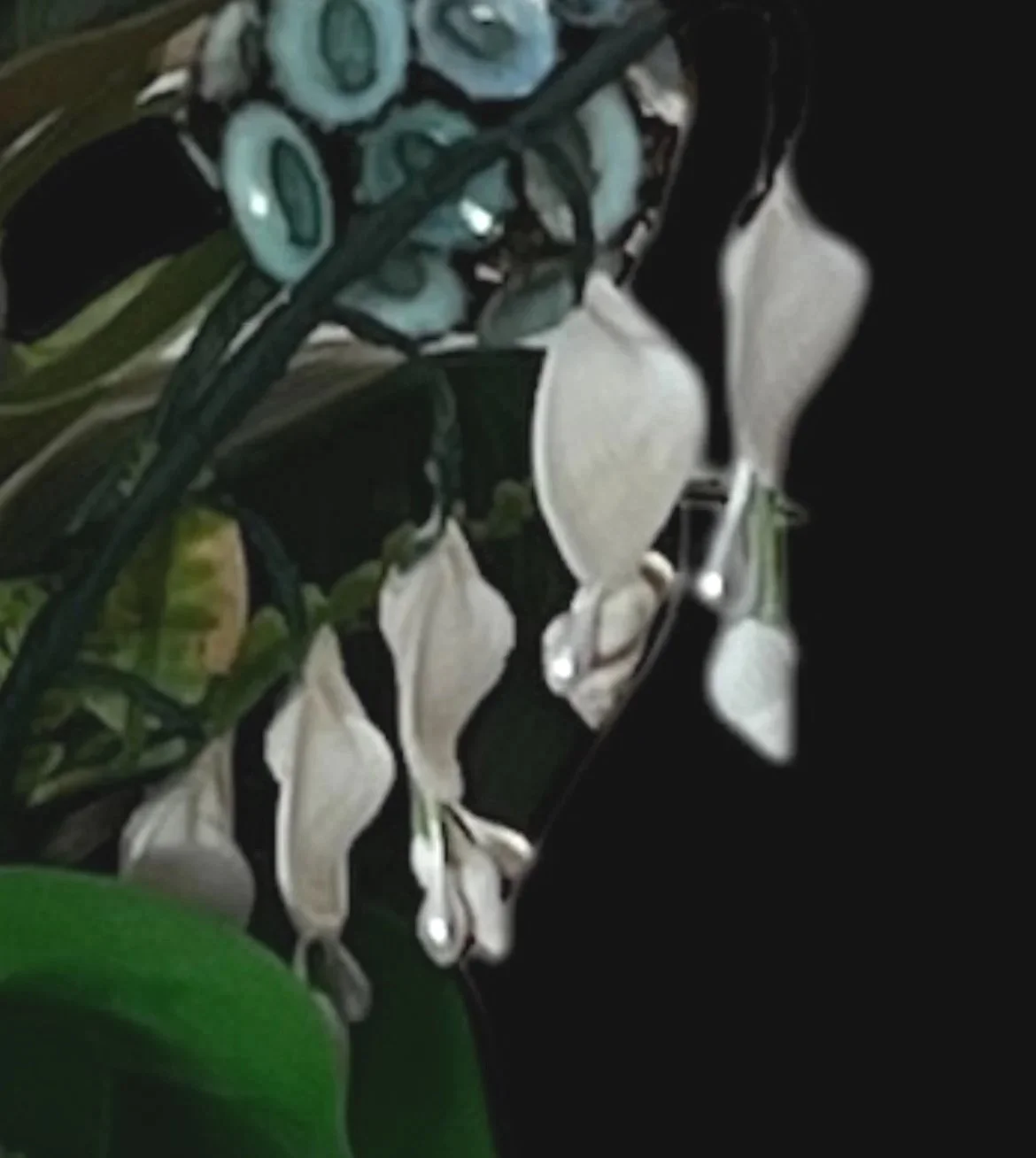
Bleeding Hearts
Though not a "flower," symbolizes flexibility, strength, growth, creativity, and adaptability, mourning, healing (aspirin precursor), and spiritual connection, peace, enchantment, the cycle of life and loss.
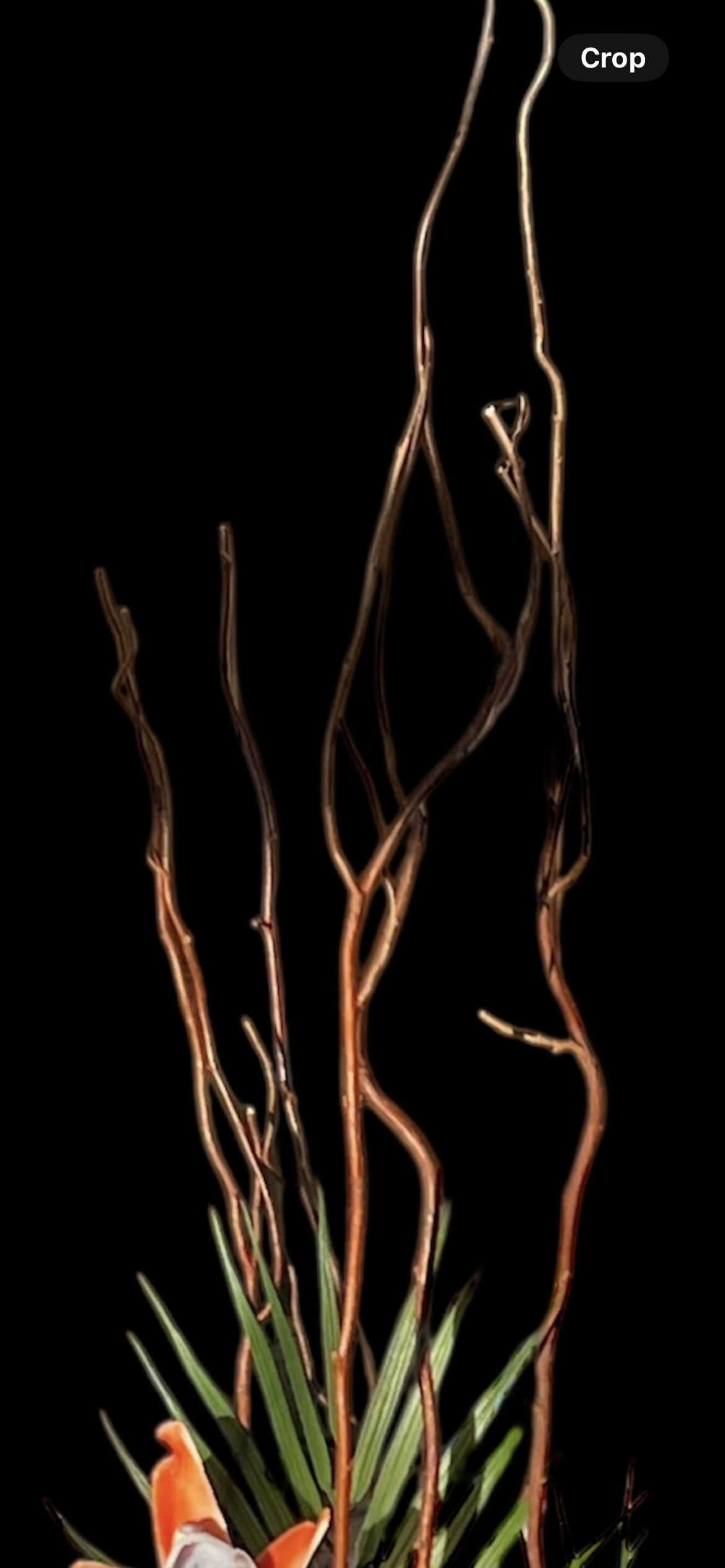
Curly Willow
Simple beauty, compliments, passion, resilience, uniqueness, strength. Conveys praise for a job well done, warmth, sympathies, and evokes romance and strong emotions.
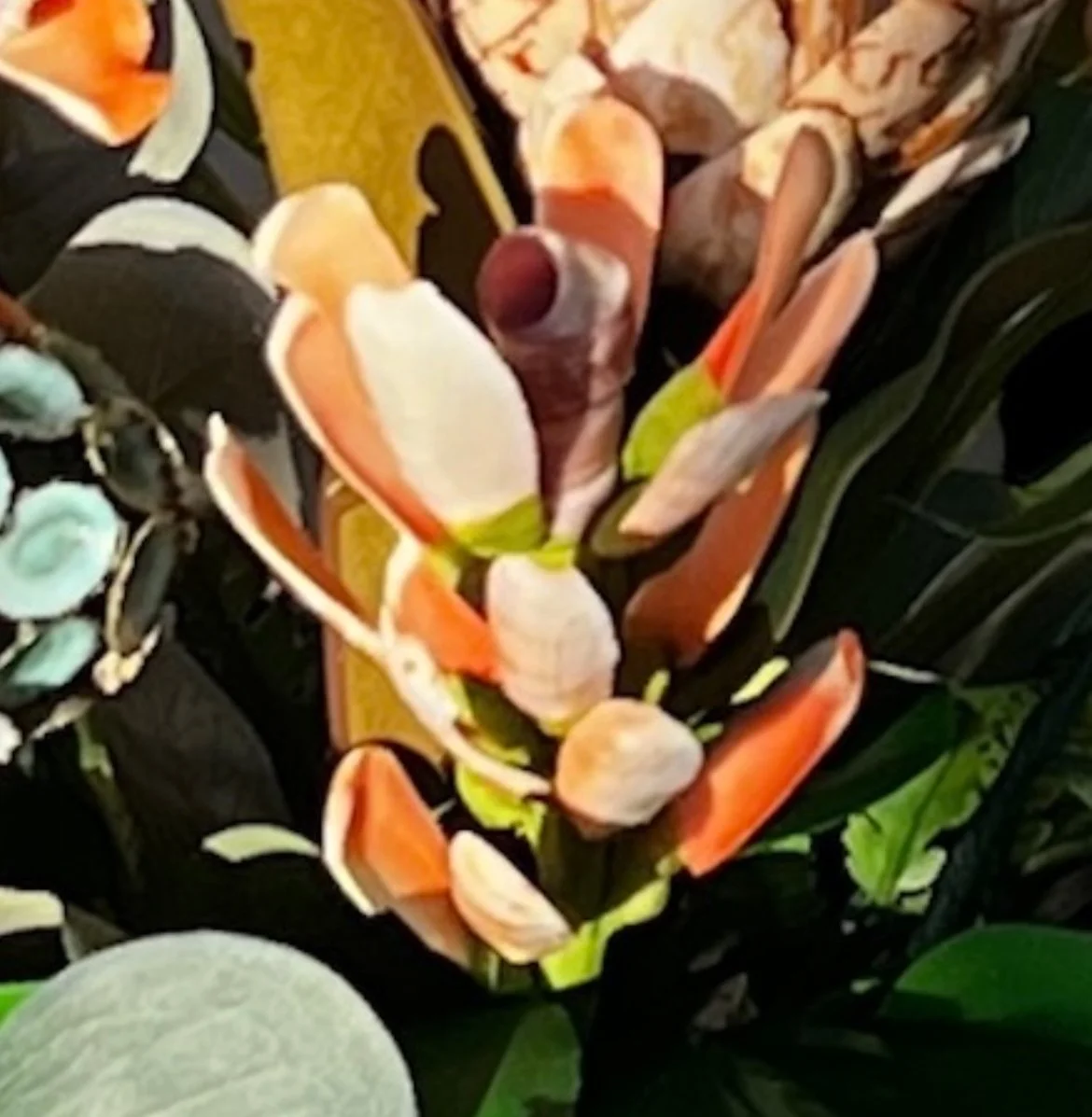
Leucadendron “Safari Sunset” (Conebush)
Sorrow & Sacrifice: In many Asian myths, mermaids cry pearls making them symbols of tragedy and sacrifice, Love & Purity: Aphrodite's tears of joy formed pearls, symbolizing divine love. Ocean's Secrets & Magic: Pearls are seen as encapsulated secrets and magic from the sea, cool and silky, holding mysteries of the deep. Duality: They represent both sorrow and innocence, a duality found in Japanese symbolism for pearls. Mourning & Protection: Due to their connection to tears, pearls became used as mourning jewelry and given to sailors as protective talismans.
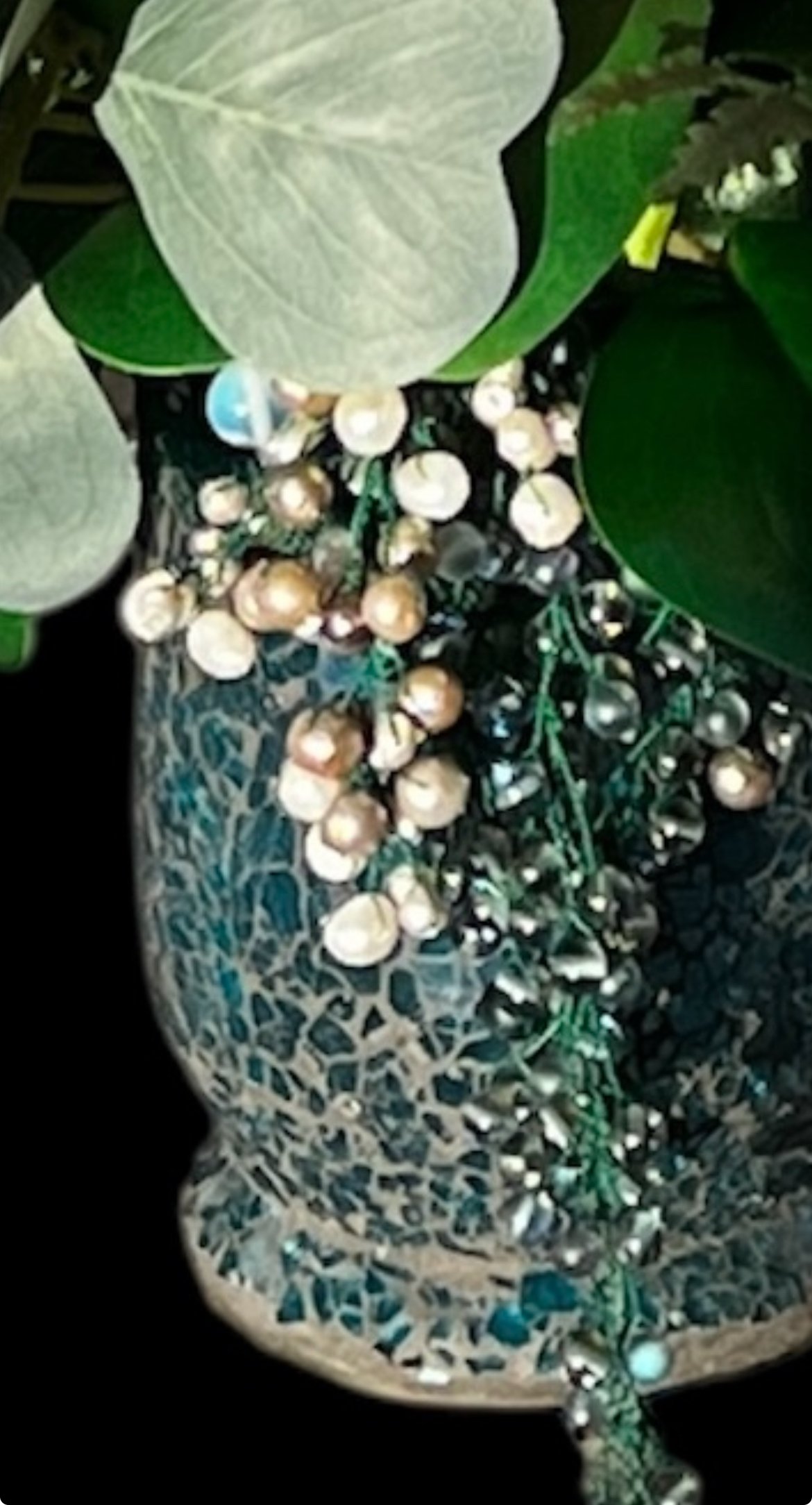
Pearls
Kintsugi (金継ぎ, "golden joinery") is the Japanese art of repairing broken pottery with lacquer mixed with powdered gold, silver, or platinum, making the cracks part of the object's unique history rather than hiding them. This centuries-old technique emphasizes imperfection, resilience, and renewal, treating breakage as an opportunity to create something more beautiful and valuable than the original, embodying philosophies like wabi-sabi (finding beauty in imperfection).
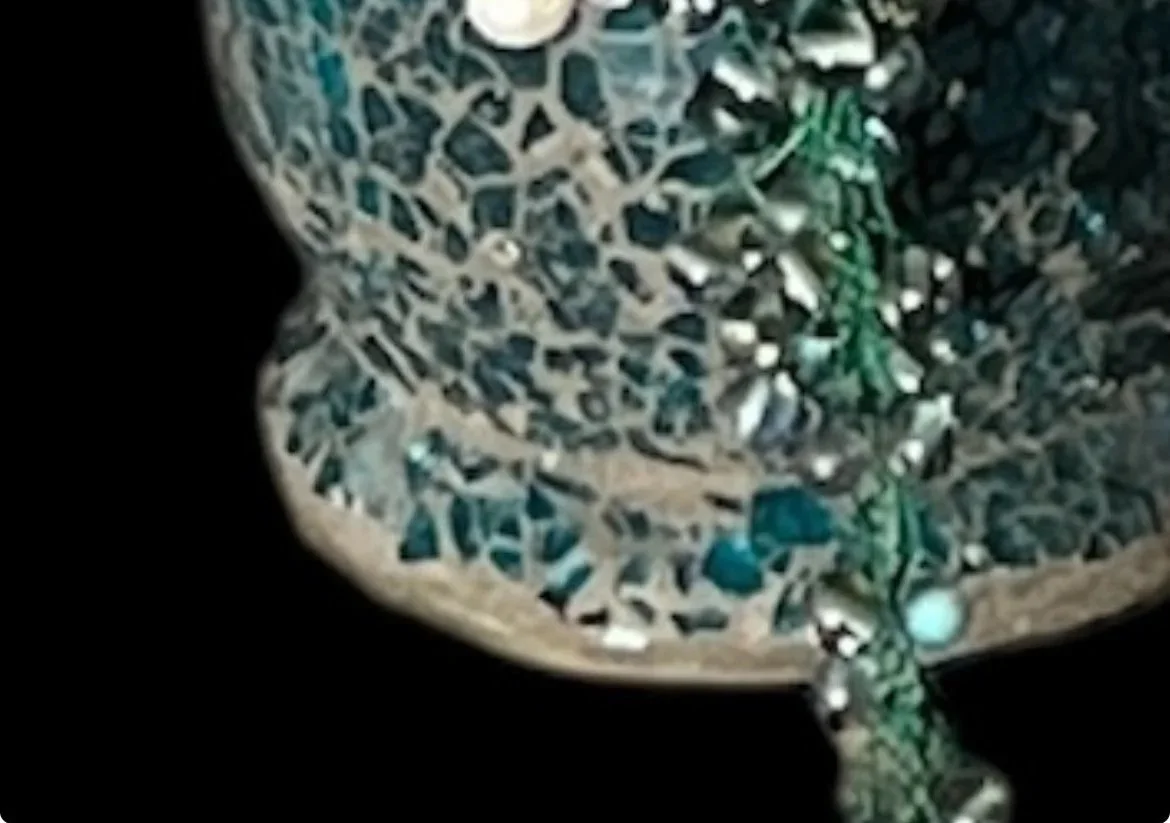
Kintsugi